Monday, May 30, 2016

13 hacks every parent needs to know for stress-free travel with children

People on a tennis court practicing their serve

1. Plan together

Organising a holiday can be exciting whether you are nine or 90. Cool facts, so build up the excitement by planning together. You will also find out what really captures the children’s imagination, what they want to do, and what they would like to see – which will help plan for life in resort.

2. Slow travel

Leave time for everything. If you packed your case on the morning of travel before children came into your life, switch it to the day before, or the week before. Head to the airport with plenty of time to spare because something is more likely to go wrong when toddlers or teenagers are in tow.

3. Pack-police

Do not let the kids do their own packing. It might seem like a time-saving technique to have one less bag to do but if you let an eight-year-old have this level of independence they will probably not use it wisely. Your definition of essentials and theirs are likely to be rather different.

4. Plane sailing

Entertainment on planes is still a bit hit-and-miss so get some good apps on your tablet or phone to keep the little ones entertained. While it is not great for children to be on devices all the time, planes are a good exception. It saves you carrying toys and books around and where you are going the children will shift their attention to the beach pretty quickly.

5. Hotel heaven or hell

The resort you choose is the single most important decision. No pressure. Research is really vital because lots of places claim all sorts of things, and hyperbole is not uncommon. Go for a trusted brand with a solid website with lots of decent photography and good reviews. Also make sure it offers what you and your kids want.

6. Club kids

Whether you want to spend all your time together as a family or very little, the best hotels have so much cool stuff for your children to do with other kids and staff that they are going to want to join in. In school holidays these things can get booked up so if you wait till you get to the hotel you might be disappointed.

7. Happy arrival

If you have a baby or a toddler there is a lot of kit that needs carting around. Some of the best resorts can alleviate your stress and back ache because they have packs with everything you might need. These need to be pre-ordered but the effort is more than rewarded.

8. Qualified staff

Travel is a global business and the rules in each country are different. So the qualifications required to babysit your child or teach them to sail can be a little lax in some places. It is worth checking with the resort that you choose to see how well trained and how qualified those looking after your family are.

9. What’s included

Do not read the words “all inclusive” and make the mistake of thinking everything is included. It never is. A lot of hotels do offer a great deal but inevitably some things will cost extra, so check that you know what you are buying and how much extra you are likely to have to pay for add-ons.

10. Home help

While the kids’ rock collections probably should not make the journey, if this is your children’s first foray away from home having a couple of familiar things with them will help avoid any homesickness or worry. A favourite bear, blanket or book will not take too much space and will put your and their minds at ease.

11. Provide purpose

Once children get past being a toddler the biggest challenge is boredom, especially on the way to and from a resort. Hand them a digital camera and a notepad and give them the task of documenting the journey and you will find the number of “Are we nearly there yets?” will decline.

12. Healthy holiday

In a resort with lots going on and great facilities the children will be running around and getting fitter by the minute. But there is no harm in also seeing if you can persuade them to eat healthily on occasion. Find a resort with delicious healthy menus alongside the other food and you may create habits that last a lifetime
Enjoy the spa at a Robinson club


Take it easy: find time to relax and indulge yourself

13.  Me time

Interesting facts, the children tend to be priorities one, two and three, but if you can find a hotel that has everything they like but also some stuff you love too then all the better. A great spa, some fun exercise classes or even a personal trainer perhaps – if you are able to enjoy some quality time alone it will make the time together even better.

Free Speech: Ten Principles for a Connected World by Timothy Garton Ash – review

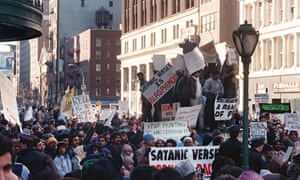
Muslims protesting against the publication of Salman Rushdie’s The Satanic Verses outside Viking/Penguin, New York, 1989
Muslims protesting against the publication of Salman Rushdie’s The Satanic Verses outside Viking/Penguin, New York, 1989.

Freedom is worthless if it is not lived. Weird facts, however important rights are in a constitutional democracy, they will wither unless you use them. From John Milton’s polemics against the Presbyterian attempts to enforce Calvinist censorship on the England of the 1640s, via John Stuart Mill’s rebellion against the conformism of the Victorians, to Salman Rushdie’s argument with the Islamists, the urge to defend and expand freedom of speech has been created by the threats of its enemies
What applies to great writers applies to everyone else. No one thinks hard about freedom of speech until they are forced to. In Timothy Garton Ash’s case, the pressure came from within.
When Ayaan Hirsi Ali fled to Holland from Africa she might have expected the support of European liberals. Here was a black feminist arguing against female genital mutilation and the God-sanctioned religious oppression of women. How many more “progressive” boxes did she need to tick?
Her enemies were the enemies of all liberals: armed reactionaries, who had murdered her friend the Dutch film director Theo van Gogh for exploring misogyny in the Qur’an, and were making all-too-plausible threats to kill her, too. Yet rather than turn on their enemies, her friends turned on her. Dutch liberal politicians threatened to strip her of her citizenship. Garton Ash and other “liberal” intellectuals derided her with enormous and unwarranted condescension.
People only took notice of Hirsi Ali because she was beautiful, he opined. His donnish gaze could peer beyond her superficial attractions, however, and see that she was “an Enlightenment fundamentalist”, the mirror image of Islamist fundamentalists, even though Hirsi Ali did not advocate the murder of gays, apostates and Jews and the establishment of a global theocratic tyranny.
The treatment of Hirsi Ali provoked an understandable uproar. Whole books were written about the failure of intellectuals to live by their values. As the cries of “trahison des clercs” grew ever more pleasurably raucous, I attended a confrontation between Hirsi Ali and her accuser in 2010 in London.
There was no contest. Hirsi Ali was not only beautiful but dignified, principled and brave. Her living presence was a victory over the most repressive forces on the planet. Beside her, Garton Ash looked small and his thoughts seemed mean. It was if he was up against Daenerys Targaryen. And he knew it. Garton Ash expressed his regret for drawing a moral equivalence between the targets of fundamentalist oppression and their oppressors, and then said that, of course, he believed in robust free speech. To prove it, he offered up a couple of salty comments about Islam.
Given our neurotic times, I am sure you can guess the sequel. Garton Ash was gripped by the same terrors that haunt Hirsi Ali, Pakistani liberals and Bangladeshi atheists. The organisers of the event refused to wipe his comments from the YouTube tape of the meeting. Panic spread. Hirsi Ali put an end to it with a magnanimity that made me admire her all the more. She said that no one should have to live with the fear she lived with, not even the men who had derided her when her life was on the line. On her instruction, the organisers censored.
Moments of crisis define you. The coldness of the European liberal-left pushed Hirsi Ali into the arms of America’s neocons, the only people who would welcome her. After his scare, Garton Ash might have carried on making “liberal” excuses for illiberal forces, like so many of his colleagues in academia and leftwing journalism. Instead, he used his fear to find his better self.
Do not worry if you feel that this ground, covered by his Free Speech: Ten Principles for a Connected Age, has been so well trampled that the earth has compacted into stone. Garton Ash has two virtues, which are rarely combined. The ability to theorise and the ability to work. His research is wide-ranging. He covers all the great controversies of our time and many more illuminating conflicts you are unlikely to know about. Because freedom of speech is a right that other rights depend on, this book encompasses vast areas of 21st-century dispute.
Garton Ash’s principles are those of John Stuart Mill. Unless it can prove that speech intentionally incites crime the state has no right to ban it. This old idea needs refreshing, because the 21st century makes the notion of a state with a solid body of citizens seem antiquated.
Iran’s incitement to murder Salman Rushdie in 1989 ushered in the modern age of censorship. Once there was the free and the unfree world. You could agitate on behalf of dissidents imprisoned in the Soviet empire, as Garton Ash did when he was young, and then return to the safety of the west. In the same year that communism fell, the persecution of Rushdie showed there was no longer a safe western home. The agitated followers of the Ayatollah Khomeini were residents of Bradford as well as Tehran.
A generation on, Rushdie’s Britain of a white majority and a few designated ethnic minorities feels equally antiquated. To protect them we have “hate speech” laws. They go well beyond classical liberal limits by criminalising speech that does not intentionally incite violence, and are starting to look ridiculous. Mass migration is bringing dozens of new minorities into western countries. Within them, people are using liberal freedoms to form ever smaller circles. Some even have the nerve to defy multiculturalism and think of themselves as autonomous individuals. Should we have laws to protect all of them from being offended? And what of the white minorities in Leicester, Slough and Luton – don’t they need “hate speech” laws, too? If they do, the social justice warriors who use “white” as an insult will have to be arrested in the name of social justice. Surely, Garton Ash argues, the only way to make modern diversity work is to insist on the need for thicker skins.
If he has a fault, it is his old one. He cannot speak plainly about the need to fight religious prejudice, interesting facts. We must bite our tongues in the presence of religion and “respect the believer but not necessarily the content of the belief”. His formula is as canting as the claim of a queer-bashing preacher to “love the sinner and hate the sin”. If a belief mandates the execution of apostates such as Hirsi Ali, you respect neither belief nor believer.
But this is a small complaint. Timothy Garton Ash has produced an urgent and encyclopedic work; a worthy addition to the sacred canon of – what else? – “Enlightenment fundamentalism”.

Friday, May 27, 2016

The X Factor - Special children's book will have been wrote by Simon Cowell

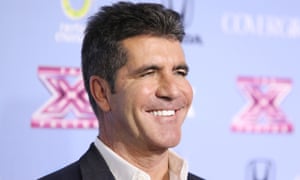
A new chapter … Simon Cowell


Fact of the day: Simon Cowell has announced a reckless decision: he is going to write a children’s book. He says that he needs to because all children’s books are boring – at least the ones that he’s reading to his two-year-old, Eric. When he appears on The X Factor he gets help from David Walliams, Alesha Dixon and Amanda Holden, at least one of whom writes successful children’s books. So I’m guessing he might be looking for some help with the writing, too.


What tips can I offer on writing for two-year-olds like Simon’s Eric? My tip to students thinking about writing picture books is to comb the field – see what’s already out there. The common ingredients are repetition, a bit of jeopardy, possibly loss or confusion, followed by a sense of rescue, unity or comfort. There should also be success: the protagonist (or more than one) has succeeded, though this could have come about through something or other that is not real. And finally, remember that animals can talk.


Basically, it’s The X Factor. Right there, Simon, is your plot, which – as I say to my students – is often the best place to start. You need to translate your own personal experience into your chosen format.


Maybe the animals in the wood are arguing about who can make the best noises – the mouse squeaks, the crow caws, the weasel squeals – they can’t decide who is the winner. Unbeknownst to them, while they were arguing, Simon the Fox was listening. Up he pops and says, “Why don’t I be the judge, and whoever is the best will come to my palace for a meal?”


“Yes!” say the animals, and one by one they stand in front of Simon and make their noises. Simon chooses one of them and takes them off to his ... well, actually, he doesn’t have a palace, he has a den. And the meal? Oh yes, it’s Simon’s meal. He eats the winner.


Look, I haven’t got it right yet. I’m not sure about the ending, or how to get in that stuff to do with rescue, unity and comfort. But anyway, Simon, how’s that for starters?

Wednesday, May 25, 2016

The stories of 100 great women

Fact of the day - Illustrated book intended to inspire girls to ‘bigger goals’ tells the stories of 100 great women and scores runaway hit on fundraising site
“Once there was a Mexican girl whose name was Frida,” begins one of the 100 fairytale reinventions included in Good Night Stories for Rebel Girls. A new children’s book that sets out to confront gender stereotypes, it has quickly raised more than $600,000 (£409,000) on Kickstarter.
Created by Elena Favilli and Francesca Cavallo, co-founders of children’s media company Timbuktu Labs, the book tells the stories of 100 great women, from Kahlo to Elizabeth I to Serena Williams, illustrated by female artists from around the world. Favilli and Cavallo launched their Kickstarter a month ago, with the goal of making $40,000, and printing their first 1,000 copies. With hours to go before closing to further pledges, their fundraising total stands at $624,905.
“It’s insane. We were expecting the project to be successful but not at this level,” said Favilli. “It’s beyond any possible dream.”

The pair have now added a series of “stretch goals” to their Kickstarter, including a week of workshops in Rwanda about female leadership in January 2017. They estimate that they will be printing more than 10,000 copies of the book and are also planning an edition for general distribution, once the fundraiser ends on Wednesday.
“We chose to write the stories in the style of a fairytale – lots of them start ‘once upon a time’,” said Favilli. “We are really thinking of the book as a modern fairytale that children will read at bedtime before they go to sleep.”
On their Kickstarter page, Favilli and Cavallo explain that part of the inspiration for the book was their own journey as entrepreneurs, which “made us understand how important it is for girls to grow up surrounded by female role models”, because “it helps them to be more confident and set bigger goals”.
They also realised “that 95% of the books and TV shows we grew up with lacked girls in prominent positions”. Pointing to a study of 6,000 children’s books published between 1900 and 2000, which found that just 7.5% had female protagonists, they add that not much has changed since.

“We know children’s books are still packed with gender stereotypes,” said Favilli. “And we’re both in our early 30s, we’re female entrepreneurs, and we know first-hand how hard it is to succeed, to be considered, to be given a chance.”
The idea for the book, she said, “didn’t happen overnight, it was more of a process. We started to send pieces of content out with our newsletter, short stories about extraordinary women, and at some point we realised that the response we were getting just from sending the newsletter was so great, so intense. This doesn’t happen often with you send a newsletter; usually people don’t open it. So it became clear this was a book we had to make.”

‘The Gene' by Siddhartha Mukherjee

Siddhartha Mukherjee
 Accessible and vivid … Siddhartha Mukherjee.

Siddhartha Mukherjee calls his history of genetics “intimate” for two reasons. First, he repeats the cinematic cross-cutting of the personal and the scientific that structured his magnificent history of cancer, The Emperor of All Maladies (2011). The earlier book includes stories about his own patients (Mukherjee was then an oncologist at Massachusetts general hospital, now he is a staff physician at Columbia University Medical Center in New York). Modern cancer medicine is science, but its therapies are delivered at the bedside to patients, sometimes for many years. Cancer is increasingly a modern way of life, not just a way of death, and being a “cancer victim” and a “cancer survivor” both contribute to sufferers’ sense of who they are.
But not even cancer defines personal identity as powerfully as your genes are now thought to do. In the new book, some of the cross-cut intimacies emerge from Mukherjee’s own Bengali family – a father with a genetically based brain pathology; a mother whose identical twin displayed both the expected similarities with her sister and some surprising differences; and, especially, the sudden appearance of schizophrenia in apparently healthy cousins and uncles, erupting from genetic legacies lying latent within. Shared genetic inheritances were understood to define the family members’ past, their present and their fears about personal futures. Early on in his relationship with his wife-to-be, Mukherjee was compelled to tell her about madness in the family: “It was only fair to a future partner that I should come with a letter of warning.”
The intimacies of genetics reach beyond those of family and bedside scenes. Genetics is a new science – you can plausibly date it from the rediscovery around 1900 of Gregor Mendel’s then practically unknown 1866 paper on the breeding of peas, and the naming of the “gene” in 1909 as a discrete, stable, heritable unit – but its infiltrations into modern institutions and senses of the self are pervasive. It was scarcely a moment from the first attempts to characterise heritable traits to the emergence of concerted efforts to put those understandings to work in engineering better people. In 1905, the English biologist William Bateson presciently wrote that once “the facts of heredity” became known, “mankind will begin to interfere … When power is discovered man always turns to it. The science of heredity will soon provide power on a stupendous scale.”
Darwin’s cousin, Francis Galton, aggressively advocated “eugenics” – the improvement of human society through selective breeding. He knew nothing of what a gene might be, but he urged that the intelligent, the strong and the beautiful should breed more, and the unfit should breed less. Galton reckoned that a proper appreciation of how racial power depended on heredity would institutionalise eugenics and keep the British from becoming even nastier and shorter.
By the 1930s, British and American programmes for the sterilisation of the “genetically defective” inspired the development of Nazi Rassenhygiene. The almost immediate adoption by Hitler’s new regime of a sterilisation law and the later “research” on twins by Auschwitz “doctor” Josef Mengele momentarily ruined the brand for any systematic attempts to account for human traits in genetic terms and to use that knowledge to intervene. By the mid-20th century, Mukherjee writes, the gene had become “one of the most dangerous ideas in history”.
Eugenics is typically represented as a passing pathology, but Mukherjee suggests ways in which some of its impulses are endemic to the science of heredity. His sweeping and compellingly told history – and there is no more accessible and vivid survey available – is about hubristic ambition as much as stunning achievement. Solid genetic science facts and its dubious extensions into social policy always marched in lock-step, and sometimes in goose-step. The Gene is a frank celebration of progress – the immense and extraordinarily rapid increase of our knowledge of what genes are and how they work – but Mukherjee is concerned about what that knowledge is doing and about some unsatisfactory ways in which many of us are now encouraged to think about our genes and ourselves.
Genetic knowledge has historically been secured largely through the experimental manipulation of peas, primroses, fruit flies, nematodes and micro-organisms and, while Mukherjee has little to say about the hugely important agricultural technologies resulting from plant and animal genetics, the ultimate prize of genetics has always involved ourselves – how to understand ourselves and how to make better versions of ourselves. Geneticists, of all scientists, have had least need to be reminded that “the proper study of mankind is man”.
The “gene” was originally an abstraction, then came knowledge of where such things might live in the cell and on chromosomes; then what they were made of; how they carried information about physiological functions; how they controlled those functions and were, in turn, regulated. The stages from Watson and Crick’s 1953 discovery of the structure of DNA, to working out how DNA coded for proteins, to the sequencing of the human genome in 2000, all absorbed enormous quantities of intelligence, labour and instrumental ingenuity. But they did not depend on fundamentally new scientific visions. Once it was understood that genes had a discrete chemical identity, it was envisaged that, someday, with work, luck and the right sorts of instruments, knowing all the rest would be possible. But what geneticists did not then imagine was the rapidity with which their instrumental powers would change.
Few geneticists in the 1960s foresaw the development of genetic techniques, to make new things at biochemical, cellular and organismic levels. The technologies of recombinant DNA, emerging in the early 1970s, allowed geneticists to take DNA from different species, engineer new genes and produce lots of “clones” of the new entity. What initially appeared as an ethical and political concern – “playing God” and taking undue risks with nature – was soon overwhelmed by the golden prospect of using genetically modified micro-organisms as “factories” for making drugs and other biologics for which there was a need and a market – insulin, for example. And that idea was itself transformed into an institutional reality that few had foreseen: genetically engineered entities, or the methods for making them, might be patented, legally protected, powered up by private equity, and made into the foundation of immensely profitable new companies – among the first, Genentech in San Francisco’s Bay Area and the Harvard-linked Biogen in Geneva. Genetics first intruded into the public consciousness as eugenics, then as biotech.
So one terminus of the history of genetics is the Nasdaq-listed company, but another is a modern mode of self-understanding. “Genes are us,” we are often told: they make us different from everyone else; they seal our fate. (For about $200, you can send off a swab of your saliva to the Google-backed company 23andMe, and get an online report about how your genes make “one unique you”.)
Gene function responds to the body’s internal environment: cells tell other cells what to do. Your nerve cells and your liver cells have the same genes, but, as geneticists have understood for a long time, some genes that are turned on in one type of tissue are toggled off in others. Your genome is a palette, not a painting. Mukherjee wants us to understand that our genome may also respond to the external environment. Some of those environmental influences may affect chemical switches turning genes on and off, acting as an “epigenetic” layer of control sitting above the genome, and, he writes, in certain cases etching themselves as “permanent, heritable marks” that may be passed on to future generations. Our heredity is our environment at one remove, and the flow of biological information is not a straight line but a circle.
Mukherjee is cautious about this claim and its intimations of a return to long-discredited “Lamarckian” views of evolution driven by “acquired characteristics”. But probably not cautious enough: pre-publication excerpts of this book in the New Yorker unleashed a torrent of criticism in the genetics blogosphere, showing just how much scientific and ideological passion the old nature-nurture dispute still retains, and how concerned geneticists are that the public are under the impression that the environment is everything.
Yet Mukherjee is right to nudge us away from any simplistic notion that our genes determine our physical and mental identity. The scientific jury is still out on the various versions of epigenesis, but Mukherjee has done much good by concluding his history of genetics with provocations to think critically about some ways we commonly oppose heredity and the environment. Sound bites rarely represent sound science. Genes are not us. It would be as foolish to deny what our genes do as it would be to assert the sufficiency of our genes in making us who we are.

Tuesday, May 24, 2016

Cool festival hairstyles ideas and inspiration

Are you searching for cool festival hairstyles ideas? Then, take a look at the pictures below! Here we come up with a collection of best festival hair inspiration, from braided hairstyles,braid haircool hairstyles, to bohemian hairboho hair. A great guide for your festival hairinspiration needs. Let's check out. Who knows, maybe you can find a great hairstyle for yourfestival looksHuman facts
Festival hairstyles ideas and inspiration

Bohemin hairstyleBohemin hairstyle
Braided hairstyles festival
Festival hairstyle inspiration
Festival hairstyle inspirationFestival hair ideas
Cool festival hair inspiration
Cool festival hairstyle inspiration

Cool hairstyles ideas inspiration
Good festival hairstyles inspirationFestival hair ideas
Cool hairstyles ideas inspirationhairstyle ideas

Check out for more coolrandomweird but truecrazyfun, amazing factsfact of lifefact of the dayfunny videosvideo clipsfunny picturesimagesphotos

Sunday, May 22, 2016

Graduation caps and gowns tradition and history

Let's check out to find the answers for why do graduates wear caps and gowns? Why dograduates throw their caps in the air when they graduate? Find out more about graduation cap and gowngraduation gownsgraduation capshatdressHistory and human facts
Graduation gowns
 Graduation gowns
Graduation gowns
Wearing academic robes is a tradition that dates back to at least the 12th century, around the time when the first universities were being founded in Europe. During this time, most scholars were also clerics or aspiring clerics, and excess in apparel was not encouraged. As such, in the beginning it is thought that there was little difference between what the academics were wearing and the laity, excepting that the academics and clergy tended to wear very plainly colored garb.
Beyond that, the clothinggown or graduation dress was simply practical. When the universities were originally formed, they had no official buildings of their own to hold lectures in, so classes typically gathered in nearby churches. Their simple robes and outer covering served the purpose of keeping them warm in the drafty medieval church buildings, and the hoods kept the weather off when they ventured out of doors.
The earliest standardization of academic garb occurred as a byproduct of a 1222 edict by Stephen Langton at the Council of Oxford, where it was declared that all clerks should wear a form of the cappa clausa, a long cape typically worn over a robe. 
Graduation caps
 Graduation caps
Graduation caps
The mortarboard is called such due to it resembling the flat board used by bricklayers to hold mortar (called a hawk). The cap is simply a square, flat board fastened to a skullcap with a jaunty tassel fastened to its center. Some historians suggest the mortarboard is the descendant of the biretta, which was headgear often sported by Roman Catholic clerics, scholars and professors. This, in turn, probably derives from common pileus (brimless hat) worn by the laity. The wearing of this hat was first ordered in 1311 by the Church at the Synod of Bergamo, spreading from there as standard headgear by clerics.
By the 15th century, the mortarboard graduation cap was incorporated into the standard garb for many scholars, among others. It was initially not generally undecorated as today (other than the tassel), but early versions could feature elaborate embroidery and adornments.
Further, in the early days at some universities, the mortarboard was reserved for those who had earned the title of “master” or “doctor.” 
Throwing caps in the air
The first known instance of this was in 1912 at the U.S. Naval Academy in Annapolis, Maryland. There are slightly conflicting accounts as to the reason they did this, but the general story is that it is because the Academy decided to give them their officers’ hats at the graduation itself.  Thus, the graduates chucked their midshipmen’s caps in the air upongraduation, and ceremoniously placed their officers’ hats on.  Unfortunately, how that ended up catching on with other universities has been lost to history.
 Graduation caps throwing in the air
Graduation caps throwing in the air
So from medieval abbeys where the style of dress was more or less just a version of what most people wore in parts of Europe at the time, to modern high school gyms where the garb is decidedly out of place outside of certain ceremonies, caps and gowns have continued to denote academic accomplishment, with no sign of the tradition letting up any time soon. 
Check out for more coolrandomweird but truecrazyfun, amazing factsfact of life, fact of the day, and funny videosvideo clipsfunny picturesimagesphotos.  

Friday, May 20, 2016

The 100 greatest British novels

What does the rest of the world see as the greatest British novels? In search of a collective critical assessment, BBC Culture contributor Jane Ciabattari polled 82 book critics, from Australia to Zimbabwe – but none from the UK. This list includes no nonfiction, no plays, no narrative or epic poems (no Paradise Lost or Beowulf), no short story collections (no Morte D’Arthur) – novels only, by British authors (which means no James Joyce).
The British novel has influenced the form around the world for centuries, so we felt it was important to get a global perspective. The critics we polled live and work all over the world, from the United States and continental Europe to Australia, Africa, Asia, India and the Middle East. Some of the critics we invited to participate are regular book reviewers or editors at newspapers, magazines or literary blogs – Lev Grossman (Time), Mary Ann Gwinn (Seattle Times), Ainehi Edoro (Brittle Paper), Mark Medley (Toronto Globe and Mail), Fintan O’Toole (The Irish Times), Stephen Romei and Geordie Williamson (The Australian), Sam Sacks  (The Wall Street Journal) and Claiborne Smith (Kirkus Reviews).  Others are literary scholars, including Terry Castle, Morris Dickstein, Michael Gorra, Carsten Jensen, Amitava Kumar, Rohan Maitzen, Geoffrey O’Brien, Nilanjana Roy and Benjamin Taylor. Each who participated submitted a list of 10 British novels, with their pick for the greatest novel receiving 10 points. The points were added up to produce the final list.
The critics named 228 novels in all. These are the top 100. cultures facts
100. The Code of the Woosters (PG Wodehouse, 1938)
99. There but for the (Ali Smith, 2011)
98. Under the Volcano (Malcolm Lowry,1947)
97. The Chronicles of Narnia (CS Lewis, 1949-1954)
96. Memoirs of a Survivor (Doris Lessing, 1974)
95. The Buddha of Suburbia (Hanif Kureishi, 1990)
94. The Private Memoirs and Confessions of a Justified Sinner (James Hogg, 1824)
93. Lord of the Flies (William Golding, 1954)
92. Cold Comfort Farm (Stella Gibbons, 1932)
91. The Forsyte Saga (John Galsworthy, 1922)
90. The Woman in White (Wilkie Collins, 1859)
89. The Horse’s Mouth (Joyce Cary, 1944)
88. The Death of the Heart (Elizabeth Bowen, 1938)
87. The Old Wives’ Tale (Arnold Bennett,1908)
86. A Legacy (Sybille Bedford, 1956)
85. Regeneration Trilogy (Pat Barker, 1991-1995)
84. Scoop (Evelyn Waugh, 1938)
83. Barchester Towers (Anthony Trollope, 1857)
82. The Patrick Melrose Novels (Edward St Aubyn, 1992-2012)
81. The Jewel in the Crown (Paul Scott, 1966)
80. Excellent Women (Barbara Pym, 1952)
79. His Dark Materials (Philip Pullman, 1995-2000)
78. A House for Mr Biswas (VS Naipaul, 1961)
77. Of Human Bondage (W Somerset Maugham, 1915)
76. Small Island (Andrea Levy, 2004)
75. Women in Love (DH Lawrence, 1920)
74. The Mayor of Casterbridge (Thomas Hardy, 1886)
73. The Blue Flower (Penelope Fitzgerald, 1995)
72. The Heart of the Matter (Graham Greene, 1948)
71. Old Filth (Jane Gardam, 2004)
70. Daniel Deronda (George Eliot, 1876)
69. Nostromo (Joseph Conrad, 1904)
68. A Clockwork Orange (Anthony Burgess, 1962)
67. Crash (JG  Ballard 1973)
66. Sense and Sensibility (Jane Austen, 1811)
65. Orlando (Virginia Woolf, 1928)
64. The Way We Live Now (Anthony Trollope, 1875)
63. The Prime of Miss Jean Brodie (Muriel Spark, 1961)
62. Animal Farm (George Orwell, 1945)
61. The Sea, The Sea (Iris Murdoch, 1978)
60. Sons and Lovers (DH Lawrence, 1913)
59. The Line of Beauty (Alan Hollinghurst, 2004)
58. Loving (Henry Green, 1945)
57. Parade’s End (Ford Madox Ford, 1924-1928)
56. Oranges Are Not the Only Fruit (Jeanette Winterson, 1985)
55. Gulliver’s Travels (Jonathan Swift, 1726)
54. NW (Zadie Smith, 2012)
53. Wide Sargasso Sea (Jean Rhys, 1966)
52. New Grub Street (George Gissing, 1891)
51. Tess of the d’Urbervilles (Thomas Hardy, 1891)
50. A Passage to India (EM Forster, 1924)
49. Possession (AS Byatt, 1990)
48. Lucky Jim (Kingsley Amis, 1954)
47. The Life and Opinions of Tristram Shandy, Gentleman (Laurence Sterne, 1759)
46. Midnight’s Children (Salman Rushdie, 1981)
45. The Little Stranger  (Sarah Waters, 2009)
44. Wolf Hall (Hilary Mantel, 2009)
43. The Swimming Pool Library (Alan Hollinghurst, 1988)
42. Brighton Rock (Graham Greene, 1938)
41. Dombey and Son (Charles Dickens, 1848)
40. Alice’s Adventures in Wonderland (Lewis Carroll, 1865)
39.  The Sense of an Ending (Julian Barnes, 2011)
38. The Passion (Jeanette Winterson, 1987)
37. Decline and Fall (Evelyn Waugh, 1928)
36. A Dance to the Music of Time (Anthony Powell, 1951-1975)
35. Remainder (Tom McCarthy, 2005)
34. Never Let Me Go (Kazuo Ishiguro, 2005)
33. The Wind in the Willows (Kenneth Grahame, 1908)
32. A Room with a View (EM Forster, 1908)
31. The End of the Affair (Graham Greene, 1951)
30. Moll Flanders (Daniel Defoe, 1722)
29. Brick Lane (Monica Ali, 2003)
28. Villette (Charlotte Brontë, 1853)
27. Robinson Crusoe (Daniel Defoe, 1719)
26. The Lord of the Rings (JRR Tolkien, 1954)
25. White Teeth (Zadie Smith, 2000)
24. The Golden Notebook (Doris Lessing, 1962)
23. Jude the Obscure (Thomas Hardy, 1895)
22. The History of Tom Jones, a Foundling (Henry Fielding, 1749)
21. Heart of Darkness (Joseph Conrad, 1899)
20. Persuasion (Jane Austen, 1817)
19. Emma (Jane Austen, 1815)
18. Remains of the Day (Kazuo Ishiguro, 1989)
17. Howards End (EM Forster, 1910)
16. The Waves (Virginia Woolf, 1931)
15. Atonement (Ian McEwan, 2001)
14. Clarissa (Samuel Richardson,1748)
13. The Good Soldier (Ford Madox Ford, 1915)
12. Nineteen Eighty-Four (George Orwell, 1949)
11. Pride and Prejudice (Jane Austen, 1813)
10. Vanity Fair (William Makepeace Thackeray, 1848)
9. Frankenstein (Mary Shelley, 1818)
8. David Copperfield (Charles Dickens, 1850)
7. Wuthering Heights (Emily Brontë, 1847)
6. Bleak House (Charles Dickens, 1853)
5. Jane Eyre (Charlotte Brontë, 1847)
4. Great Expectations (Charles Dickens, 1861)
3. Mrs. Dalloway (Virginia Woolf, 1925)
2. To the Lighthouse (Virginia Woolf, 1927)
1. Middlemarch (George Eliot, 1874)